Showing posts with label independent film. Show all posts

Tuesday, October 31, 2017

2017 Valley Film Festival Announces Winners

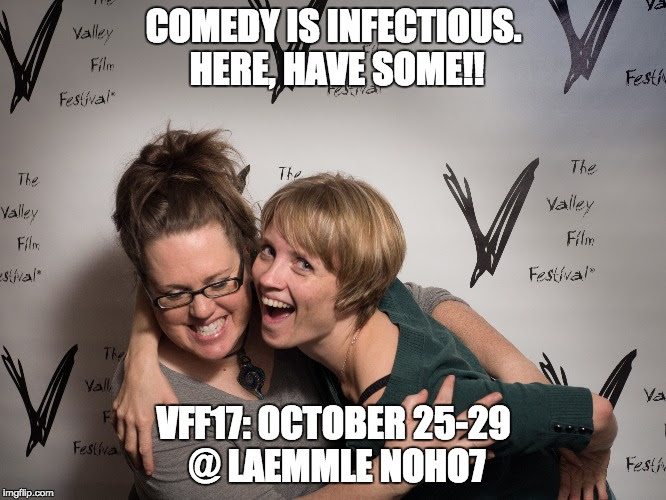
The Valley Film Festival (VFF) has wrapped its 17th showcase of independent film and we look forward to seeing you at VFF18, November 2018!

Producing VFF is a year round effort and we'd like to thank the army of volunteers, filmmakers, sponsors, fans, Laemmle NoHo7 staff, and Community Partners without whom the Festival would not be possible. We sincerely appreciate your time, commitment, and enthusiasm to bring quality cinema to L.A.'s San Fernando Valley each year. 

A very special thanks to Gallery 800 for hosting our closing night awards and Big Sugar Bakeshop for the special treats. Without further ado, we're thrilled to share our 2017 Award Winners:

JACK F. MURPHY AWARD
For Achievement in Independent Filmmaking


"10 DEGREES HOTTER" JURIED AWARDS

Short Film
Directed by Emma Huibregtse

Documentary Feature
Produced by Ryan Boyko and Diana Cofini
*U.S. Premiere

Narrative Feature (Foreign)
Directed by Dimitri de Clercq
*California Premiere

Narrative Feature (U.S.)
Directed by Tom Konkle
*World Premiere

BEST MUSIC VIDEO (Juried)

Directed by Max Sachar and Natasha Adorlee Johnson


AUDIENCE AWARDS

Directed by Christian Guiton

Directed by David Garry

Directed by Alexandra Adomaitis

Directed by Arnold Chun

Directed by Michael Valinsky

Directed by Michael Chan

Wednesday, July 26, 2017

VFF17 - Focus On: The Business of Licenses and Permissions (Free Panel)


One of VFF's goals this year is to ramp up our FREE educational panels. We had so much fun at Columbia College Hollywood in June, for Meet The Programmers, that we're doing it again next Wednesday, August 2, for an evening all about The Business of Licenses and Permissions. Food & beverages donated by Stonefire Grill and David's Tea. Join us!

Wednesday, August 2 @ 7:00pm (Networking)/ 8:00pm (Panel)Columbia College Hollywood18618 Oxnard StreetTarzana, California 91356-1411

This event is free and open to the public, however an RSVP is required for headcount purposes. RSVP through FilmFreeway or  

. Free parking is available on site and the venue is accessible from the Orange Line Reseda station.
 

NOTE - If you can't make it in person we will be broadcasting on Facebook Live

Join the VFF team as we navigate the complicated world of copyrights, licenses and permissions with our panel of experts:

Linda Nelson - Distribution Linda and her partner, Michael Madison, built a distribution company, Indie Rights, from scratch ten years ago and now represent more than 500 films globally. They maintain offices at AFM and Cannes.

Dean Rusu - Copyrights Dean is a graduate of York University with a background in Business Affairs and international distribution for studios such as Warner Bros., Universal and Paramount. Creatively, Dean is a writer, director and producer of documentaries, dramatic short and features.

Kevin Laffey - Music Clearances Kevin specializes in Music clearances and has consulted for both studios and independent projects - including Lionsgate, Showtime, The Weinstein Company, Sony, Warner Bros and Paramount Pictures.

Moderated by Ken StorerA graduate of Vassar College, Ken began his began his career with the DGA, ABC, and Disney, before landing on a desk at ICM working for the head of Television Packaging. There he became assistant to the showrunner of Law & Order: SVU at Universal Studios and eventually a staff writer for three seasons.


Thursday, June 15, 2017

5 Ways You Can Help VFF17 Today

We can't wait to welcome you back to North Hollywood for the 17th Annual Valley Film Festival, October 25-29, and are excited to announce that our programming is in full swing, with the Los Angeles Premieres of the documentary, That Never Happened: Canada's First National Internment Operations, produced by Ryan Boyko and Diani Cofini, and the feature film, The Father and The Bear, directed by John Putch, which will open the Festival at Laemmle NoHo7.

But first, we need your help before our fiscal year ends on June 30th.

As a non-profit, we rely on your donations and thank you for making us the longest running film festival in L.A.'s San Fernando Valley, 17 years and counting! Your donation is tax-deductible and 89 cents of every $1.00 goes directly into producing the Festival and our local economy. Please give what you can today so we may continue to showcase independent films from around the corner and around the world.

Can't give today? We hear you. There are other ways you can help The Valley Film Festival:

Need more reasons to donate to The Valley Film Festival?
  • Our volunteer-run team are some of the hardest working people in the entertainment industry. Period. 
  • Long before California film incentives, we were rewarding local film production with our signature "Made in the (818)" program.
  • We love subtitles! We're not just a local fest, we screen films & host filmmakers from all over the world. Like, totally.
  • Dreams start somewhere & never die. We screen films made by & for tweens to octogenarians and welcome all 60+ genders. There's a home for you at VFF.
  • Film festivals bring a community of filmmakers and film lovers together to form lasting relationships.
  • Because you can.  

Sunday, June 4, 2017

The VFF Team @ Cine Gear Expo

Cine Gear is one of our favorite local expos! It's a chance for us to play around with film equipment, discover the newest technology, and meet up with friends from all over the globe on the historic Paramount Studios backlot.  Since you missed us this year, join us May 31-June 3, 2018.


Friday, April 21, 2017

VFF17 @ The Lot Studios

Thanks to our friends at Dances With Films, we're crashing their office space at The Lot Studios for the next two months! Looks like we're in good company with OWN next door. If only Oprah would share her wifi with us....


Wednesday, March 29, 2017

Cannes Film Festival Unveils Poster for 70th Anniversary

Italian actress Claudia Cardinale graces the 2017 Cannes Film Festival poster to celebrate 70 years of the worlds best cinema. If you're attending the market, May 17-28, please let us know. If we're not there to host our Cocktails in Cannes, we'll introduce your to our filmmakers in attendance. More importantly, let's just take a moment to let this sink in...70 years....! Well, VFF is on the verge of 20, so just another 50+ years to go.


Tuesday, February 28, 2017

Thursday, February 2, 2017

VFF17 ~ Save The Dates: October 25-29 @ Laemmle NoHo7

While we get our non-profit paperwork in order, ink our 2017 dates in your calendar: October 25-29 @ Laemmle NoHo7! Looking forward to seeing you all there.


Monday, October 3, 2016

...And That's a Wrap on VFF16!

We proudly close the curtain on another great lineup of cinema so independent it can be found only in L.A.'s San Fernando Valley. This year, VFF screened over 50 thought provoking and entertaining films from 9 countries. Thanks to our volunteers, filmmakers, supporters, fans, and the Laemmle NoHo7 staff for making VFF16 rock!

Please take a moment to congratulate our 2016 award winners with us: 

AUDIENCE AWARDS:
BECOMING A MAN, directed by Jared Lara
CHIPPY, directed by R.D. Womack II
FRIEDA'S TURN, directed by Jay J. Levy
SLOW FADE TO AUTUMN, directed by Marie Tang Urquidi

"10 DEGREES HOTTER" JURIED AWARDS:
Narrative Feature: CHANGEOVER, directed by Estes Tarver
Documentary Feature: IT'S ALWAYS ABOUT THE STORY: Conversations with Alan Ladd, Jr., directed by Stanley Isaacs
Narrative Short: BLACK COMEDY, directed by Luigi Pane
Documentary Short: WEST EMPIRE, directed by Mathieu Le Lay

BEST OF (JURIED AWARDS):
Music Video: STORIES UPON YOUR LIPS, directed by Bastien BronTrailer: SYNAPSE, directed by David Bertran


Friday, August 7, 2015

Countdown to VFF15...T-Minus 75 Days

75 days out and still over 300 films unwatched. 

This week we called upon our screening group volunteers to commit to an additional 10 films. With this plan in place, we're confident that every film can be viewed by August 23. This will allow us time to review the films in consideration, find the content that best complements each other and the festival, program, schedule, and update the website by September 7. 

If we miss this deadline, we miss the 6-8 week press window and we make it more difficult for filmmakers outside of Los Angeles to plan their attendance. Because we rely on our friends in the press to get the word out AND our filmmakers to support their films, this is a really important deadline for us to meet. 

We're also chasing down our sponsors, returning & new, and securing after-party venues. 

We'll provide another update once our submissions close on August 15th! 


Monday, July 27, 2015

Last Chance to Submit to VFF15 ~ Submissions Close August 15th


Dear Filmmakers: 

Don't let the VFF15 submission deadline pass you by. Once submissions are closed, they're closed. We have a record number of submissions (and they're still coming in) and made a promise to filmmakers to view every film, from start to finish. No exceptions. 

Have no fear. If you miss the August 15th deadline, you can always submit to VFF16, in January 2016. 

Film submitted through July 31 are $75 USD and submissions sent in between August 1-15 are $100 USD. Now don't you wish you submitted in February when it was pay-what-you-can?

If you're unsure whether or not to submit your film, we encourage you to look through our archives to get a feel for our programming. 

You may submit through FilmFreeway.com, Festhome.com, or to VFF directly

Monday, July 13, 2015

Countdown to VFF15...T-Minus 100 Days


100 days out. This is when we start to get nervous.  Even though our venue is locked down and our call-for-entries is coming to an end, once we hit the "T-Minus 100 Days" mark,  we feel just a wee more pressure to speed things up. 

Our main priority right now is to make sure every film is viewed & reviewed, from start to finish, by August 31. This year, 95% of our submissions are online. Thanks to portals such as FilmFreeway.com and FestHome.com, VFF is now able to include our foreign alumni filmmakers (and fans) in the reviewing process; we currently have approximately 30 volunteers watching submissions from all over the world. 

Usually around this time, we've picked up on submission trends. One year it was female westerns, another year it was 3D films or "Hollywood," but this year we've seen several films set just before, during, and after the Serbia/Kosovo war. While the reality of war is beyond brutal, it warms our heart to know that those affected by this conflict have found their voice via film. 

Next on the agenda is filling in the festival gaps with panel discussions and networking gatherings. If you have ideas, or wish to be involved, please let us know. 

Once we hit "T-Minus 75 Days" we'll sneak in another production update. Until then, connect with us on Facebook or Twitter for everyday interaction. 


Monday, February 9, 2015

The Valley Film Festival 2015 Call For Entries


North Hollywood, CA (February 9, 2015) – The Valley Film Festival is now accepting submissions for its fifteenth annual season of independent films from around the Valley and the world.  The initial period is “pay what you can.”  The final deadline is August 15, 2015.

We have begun accepting short and feature-length submissions for our 2015 season.  We are seeking quality narrative / fiction films, documentaries, animation, and music videos that were produced independently anywhere in the world.  The films or filmmakers may have some connection to the San Fernando Valley area, but this is not required. 

We are accepting entries from now through August 15, with a total of five submission periods.  For each period, the application fee is the same for any film, whether short or feature-length.  Here is the schedule of dates and fees (US dollars) per film:   

February 1 - 28, 2015 -- pay what you can
March 1 - April 25, 2015  -- $25
April 26 - June 20, 2015 -- $50
June 21 - July 31, 2015 -- $75
August 1 - August 15, 2015 -- $100

The initial submission period (February 1 to February 28) is “pay what you can.”  During this time, applicants may pay whatever they like, including nothing.  If they pay little or nothing, we request that they do something additional of their own choosing that helps promote the festival. This could include, for example, “liking” the festival on Facebook, or perhaps distributing some useful information or praise via Twitter.  After this initial period, the per film entry fee then gradually increases until the final deadline in August. 

The tentative festival dates are October 28 - November 1, 2015, to be held at the Laemmle NoHo 7, located in the NoHo Arts District.  For further details, see http://www.ValleyFilmFest.com.

Founded in 2000, The Valley Film Festival, a project of Community Partners®, is the first and longest continually running film festival in the San Fernando Valley.  With a mission to join established filmmakers and emerging talent with adventurous audiences in Los Angeles, the VFF has screened a total of nearly 500 shorts, features, documentaries, animated films, and music videos from all over the world.  While emphasizing independent film, the festival also has occasionally shown studio productions, including Boogie Nights, Chinatown, Encino Man, Fast Times at Ridgemont High, Magnolia, Terminator 2, Valley Girl, and World Trade Center. 

In addition to screenings, the festival provides educational panels, social events, and awards.  The juried "Ten Degrees Hotter" award is for one short and one feature from a competitive section.  Additionally, there is an award for short films, in the non-competitive section, as chosen by the audience.

For more information, visit the festival website www.ValleyFilmFest.com

Or send an email to Info@ValleyFilmFest.com

And follow us on:
Twitter (@ValleyFilmFest)
Facebook (“The Valley Film Festival”)
Our blog (http://www.ValleyFilmFest.blogspot.com)

Friday, December 12, 2014

Win a DVD Courtesy of 1st Sight Films by Attending The Valley Film Festival

The team behind Love at First Sight is collecting pictures of people wearing Love at First Sight pin badges from around the world and would be over the moon to have VFF14 patrons participate...especially if you're in love! They will pick one photo per month...maybe the most romantic, maybe to the funniest, or just to someone they'd like to surprise. 

(1) Attend The Valley Film Festival, now through December 14, and pick up your pin at our will-call table. 
(2) Take a picture of you with your pin in front of the festival step and repeat
(3) Post the picture on the Love at First Sight Facebook page (don't forget to tagThe Valley Film Festival)

Love at First Sight will re-post the pictures and will send at least one FREE DVD per month.


The 14th Valley Film Festival Is Here!

The 14th Valley Film Festival kicked off Wednesday night with a packed house for Route 30 Three! we could not have asked for a better film, crowd, or cast & crew to share our special night with. 

The fun continued Thursday night with 8 films directed, produced, and/or written by the awesome women in our "Girls on Film" shorts program.

Tuesday, December 9, 2014

Dreams Deferred and Realized: An Interview with Venkat Krishnan about His Film “Butterfly Dreams”


Butterfly Dreams is one of the terrific films in our Dramatic Shorts program on Saturday, December 13.  This drama, made in India by Loyola Marymount University student Venkat Krishnan, shows problems with poverty and child labor practices, but is not preachy or didactic.  Instead, it brings honesty, subtlety, and humanity to its subject.  It does so via the story of Sumi, a nine-year-old orphan who lives by herself in a hut, works in a garment factory, and dreams of learning to read, write, and become a doctor.  The other main character, Ravi, is an educated man who comes to her village to sell his family’s property.  He befriends and tutors Sumi, and eventually offers to adopt her.  Ultimately, this does not happen, but Sumi continues to hope and work toward a better future. 

After seeing this film, I wanted to talk with Venkat, to go deeper into what it's about.

James Latham:  You have described the “butterfly” in the title as symbolizing Sumi’s dream of transformation.  Maybe it also suggests her desire for freedom and the fragility of that dream.  Anyway, to me, the title also evokes the documentary Hoop Dreams, which follows the lives of two African-American boys struggling to achieve success via basketball.  These are different films, but what do you make of their similarities? 

Venkat Krishnan:  Dreaming is one thing that is common for both rich and poor.  Whether they are attainable or not, every human being has dreams - some big, some small.  In Butterfly Dreams, Sumi, a nine-year-old girl, works in a factory.  She has no parents.  She lives alone and takes care of herself.  At her workplace, she is verbally and physically harassed by her employer. In this oppressive environment, she decides to shed her skin like a caterpillar and yearns to fly free as a butterfly and strive for a more meaningful existence to her life.

Butterfly Dreams is a 22-minute film and Hoop Dreams is almost 3 hours.  However, the underlying themes of both films are the same.  In these two films, the main characters’ real-life struggles unfold on the screen as they strive to find a way to achieve their dreams.  Both films capture the elements of oppression, disappointment, hope, and determination. These films also portray how important society is in shaping one’s life.  Though Butterfly Dreams is fiction, nothing rings false.  The story is based on the real life experiences of working children.  In that sense, both films are real, human dramas.

JL:  I understand you required all the shooting locations in Butterfly Dreams to be authentic, which made it hard to secure a local factory setting, as owners did not want to risk being criticized in the film.  You eventually found a place.  To me, the locations are just part of the broader and deeper authenticity of your film.  The content and style generally seem quite faithful to the characters, their surroundings, and their situations—without slick stylization or common melodramatic techniques for depicting poor people, such as exaggerating or exoticizing their victimization.  Yes, the factory owner is exploitive (though not purely evil) and Sumi has a hard life, but this comes across as sort of matter-of-fact, just the way things are in the everyday lives of a lot of people in the world.  What do you think?

VK: The reality is much more difficult than what was portrayed in the film.  In many cases, children work seven days a week, 18 hours a day in inhuman conditions.  Sometimes they are given no money at all and the only compensation they get is food and shelter.  Most inhuman of all is the bonded labor.  Children are often sold to a buyer as a commodity for a certain period of time by the parents to pay their debts.  Until the parents repay this borrowed money, the children are treated as collateral security and the owners exploit them.  In addition to all of this, statistics say that more than 50% of children report facing one or more forms of sexual abuse.  It is impossible to cover all of this in one short film.  I am now working on a feature film script, which explores all these issues.

JL:  A pivotal and emotionally tough scene is when Ravi leaves the village on a bus and we see Sumi behind him, through the rear window, running toward him and eventually giving up—all in one long take.  We see them both reacting at the same time, and wonder whether he will get off the bus.  Part of what I like about how the film portrays Ravi is that he is generous but ultimately not a heroic savior.  This seems much more authentic than if he just facilitated a happy ending, to make audiences feel good.

VK:   A happy ending is, most of the time, a pretentious ending because in real life, not everything ends happily.  For this story, I always wanted to have a real and plausible ending.  To me, an honest ending justifies the script and respects the characters in the film.

Many times we come across people we want to help, but the situations don’t permit it.  Ravi himself is struggling for money and has his own family to take care of.  As you mentioned, Ravi is not a heroic savior, just an ordinary person who has a good heart.  Sometimes that alone is not enough.

JL:  This scene comes after what, for me, may be the most striking moment in the film.  After Ravi plans to adopt Sumi, the other local families get word and bring their kids to ask for the same thing from him:  to take them away for a presumably better life.  Shocked and overwhelmed, Ravi changes his mind.  For me, there is a lot packed into that scene, including what it says about impoverished families and the complex dynamics and ethics of adoption.  With literally millions of children living in these conditions in India, what options do these families have?

VK:   Some families have been working as child laborers for more than two generations.  Poverty is the biggest reason for this.  Other reasons are the lack of implementation of child labor laws, the absence of compulsory education, and the non-accessibility of schools, to name a few.  It is estimated that it would take at least $500 billion over a 20-year period to end child labor, if it happens at all.  The Indian government has strict laws regarding child labor, but the factory owners know how to get around them.  For example, children under 14 years of age are considered as child laborers.  Many children don’t have birth certificates as they were not born in the hospital, and changing birth certificates for the purpose of working is not that difficult. Children are threatened by exploiters in many ways and are forced to lie about their ages to the officials to keep their jobs.  Only if factories decide not to hire children, can child labor be stopped completely.  But what is the probability they will do this when they are making a ton of money by exploiting children?  Another way to end child labor is through educational awareness of this issue.  Parents also have to understand that only a good education can lead to a better life for their children and to realize that the current income from their children is only a temporary solution to their problems.

JL:  I like that Sumi is portrayed as a strong, sensible, capable, optimistic, and resilient person.  What particular challenges are there for girls living in these conditions, versus boys?  What hopes can they realistically have?

VK:   Children who live in these conditions learn to take care of themselves sooner than most other children.  They face struggles everyday in their lives and that makes them stronger, more capable and more mature.

The most difficult problem girls face after a certain age is sexual abuse.  In some cases, unfortunately, girls are trafficked into the sex industry.

India is a huge country and child labor is practiced in many places from roadside stalls to big manufacturing industries.  The government has strict laws against child labor, but still has to go further to make sure the laws are applied and strictly monitored.  Even though it is impossible to stop this child labor immediately, frequent monitoring and severe punishment of those who employ these children would definitely bring the count down.  The government is also trying its best to help some of the children go to school, by providing free education and free food.  There are some non-governmental organizations that perform these services too.  They also provide some stipends to families, whose children go to school, to compensate for the missed income.  At the end of the day, it all comes down to money.  The more money spent, the more children can be saved.

Child labor in India is not just a national issue, it is a global issue.  Thefts or murders cannot be completely stopped by laws; they can be stopped only by the people who commit them.  Similarly, child labor can be stopped only by the people who hire children.

JL:  For an adoptive parent of a young girl from rural Ethiopia, this film resonated for me on many levels.  Though my daughter is being raised American, we are fortunate to live in a place where there are great ongoing opportunities for her to connect with other adoptees, immigrants, Ethiopians, and people of color generally.  As an adult immigrant to the U.S., how has that transition worked for you?

VK:  When I came to the US, I had to admit that I had cultural shock.  I was raised in a typical Indian family and was used to Indian customs only.  Indian culture is very different from Western culture.  But eventually I learned how people do things here.

America is very diverse, particularly Los Angeles.  Most of the time, I hang out with filmmakers, some of whom came from different countries.  Mostly we talk about films, but we also talk about each of our cultures, our food, and the languages we speak.  The more I interact with people of other cultures, the more I come to know that, deep inside, humans are the same.

JL:  I understand you came from rural India, where as a child you had no TV and could go to the movies only once a year, so instead read a lot.  There are obvious parallels between your youth and Sumi’s.  So how did you manage to come here and attend film school at LMU? 

VK:  In the town where I grew up, child labor is not that common.  My parents strongly believed that education is a must for a promising and secure future and a stable life.  In India, the more educated we are, the better career options we have.  With my parents’ support, I was able to complete my bachelor’s degree in India.

I never thought I would come to the US and study film.  Even though the film schools here are excellent and have cutting edge technologies, they are expensive.  When I was admitted into Loyola Marymount University for my MFA, I didn’t want to miss this great opportunity for financial reasons.  I worked and saved money for my education.  I am glad I went to LMU and trained to be a professional filmmaker.

JL:  I’m sure you know that filmmaking is a tough field to enter and stay, much less succeed.  Hard work, talent, a strong education, and an award-winning student film all provide a good start.  Looking ahead, if you were to fulfill your long-term dreams in filmmaking, what would that look like?

VK:  Even for accomplished filmmakers, making movies and marketing them has become more challenging these days.  So, obviously for beginning filmmakers like me, it is not going to be easy. Everyday I attempt to complete five pages of work on my new screenplay.  Every week I participate in a filmmakers group to discuss films and new opportunities in the business.  I also constantly read film-related articles and learn something new every day.  After all, success comes from a daily routine and only today’s efforts will pay off tomorrow.

JL:  Is there anything you’d like to mention that we haven’t already covered?

VK:  The main reason I made this short film is to show the world how children are exploited in poor working conditions in these places and to bring awareness to the public, global governments and other non-profit agencies throughout the world so that they may consider contributing to protect these children.  I sincerely thank The Valley Film Festival for screening this film and being a part of spreading the awareness.

JL:  OK, thanks for your time, and for sending us your film. 

VK:  Thank you.  For more information on the film, please visit: http://www.imdb.com/title/tt2973224/


---

The 14th annual Valley Film Festival takes place December 10-14, 2014, at the all-digital Laemmle NoHo 7 in North Hollywood.  For more info, visit our website or Facebook page.  Butterfly Dreams screens with our Dramatic Shorts program at 12:00 noon, Saturday, December 13.